Ford RS: What We Won, What We Lost
Progression, Recession.
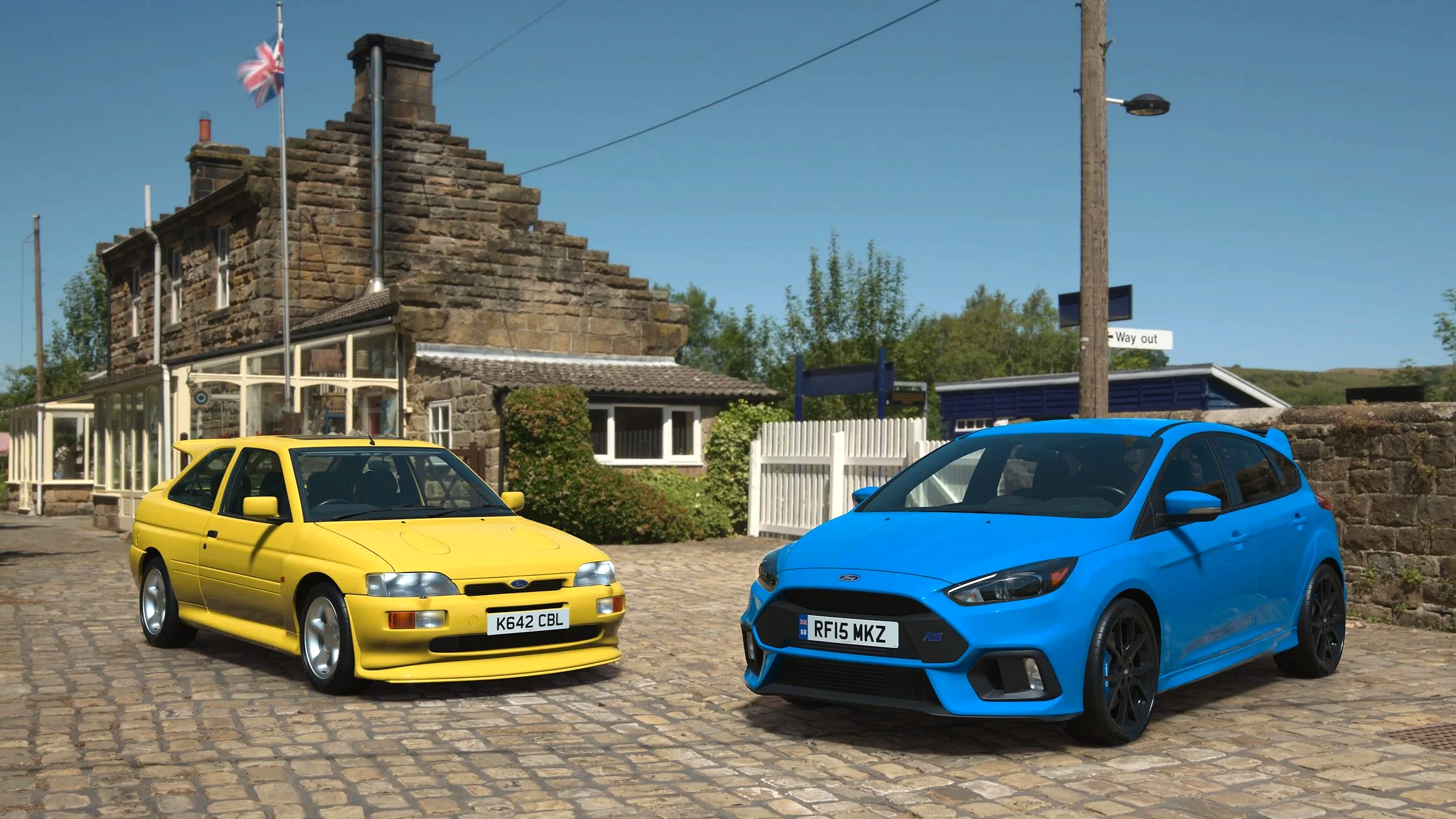
I’ve been lucky enough to drive both of these famous fast Fords (Source: OptionZ via Gran Turismo)
Pause a moment to consider the mass of events that have occurred since the 1990s. We’ve lived through an abundance of historical events, and we’ve sampled highs and lows in that time period too. We’ve also experienced a huge wave of technological progress, and surfed upon the benefits that wave has brought us.
In 1992, Ford introduced the Escort Cosworth. A true “super hatch” before super hatches became the norm, the 200bhp+ all-wheel drive rally-inspired B-road botherer was an extreme – and in the wrong hands, dangerous – machine. It marked a high point in automotive performance at the time though, and became a working class hero. It was after all, at the end of the day, still a Ford Escort.
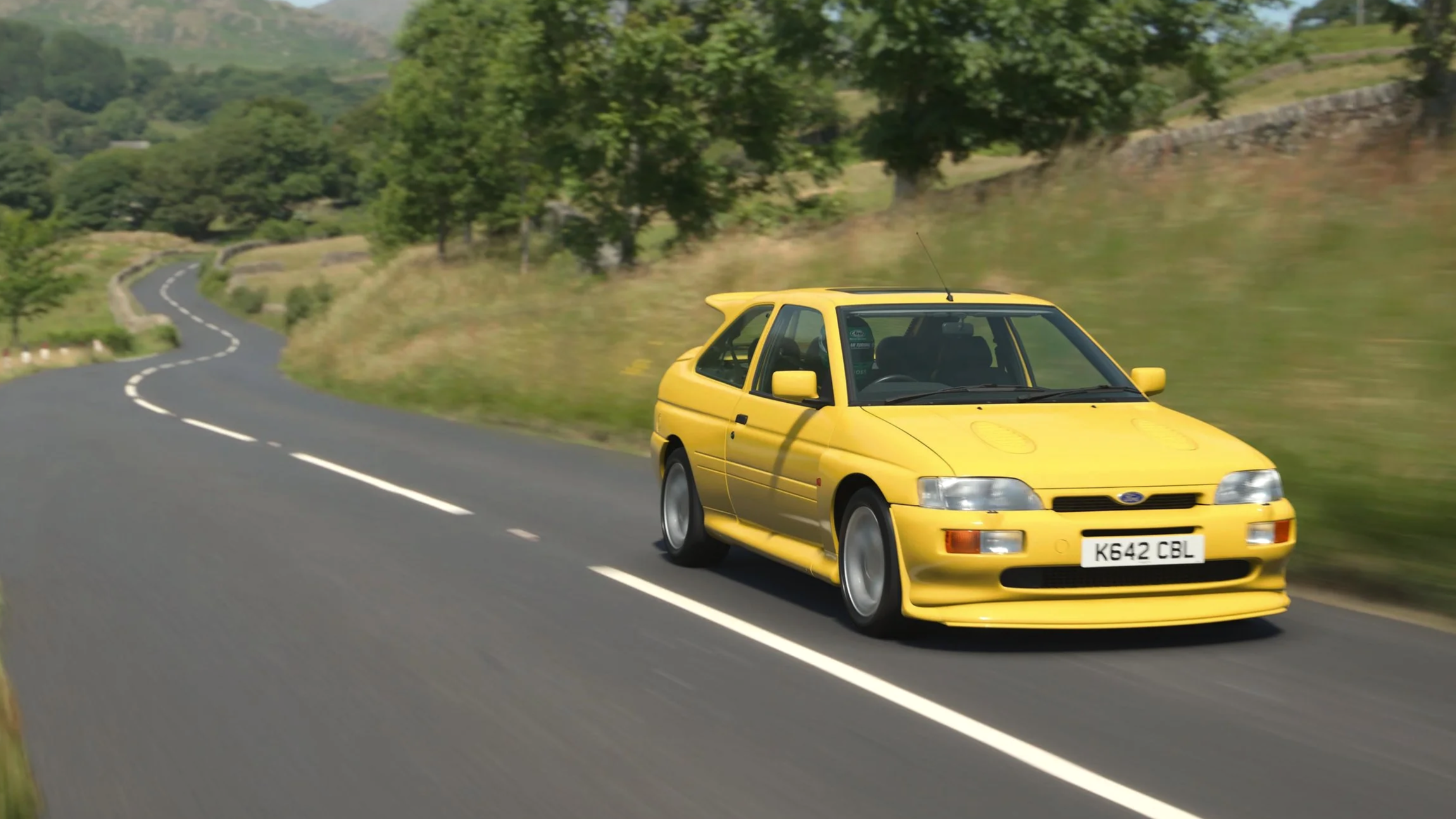
GT7’s depiction of the Cosworth is accurate, but the turbo lag needs more delay (Source: OptionZ via Gran Turismo)
When the Escort Cosworth wrapped up its stint in the Ford line-up in 1996, it took a while before another RS appeared, and looking back now, they weren’t a patch on the Escort. Who remembers that awkward little era of the early 2000s and turn of the 10s? During those years, most hot hatches could generate serious power. They just couldn’t get around a corner without under steering into an oak minding its own business.
2016 saw the arrival of the best RS since the Escort Cosworth though. It was undeniably brilliant, hugely capable and ridiculously good fun. I threw one around an airfield once, on top of the countryside, of course. It was one of the highlights of my career to date.
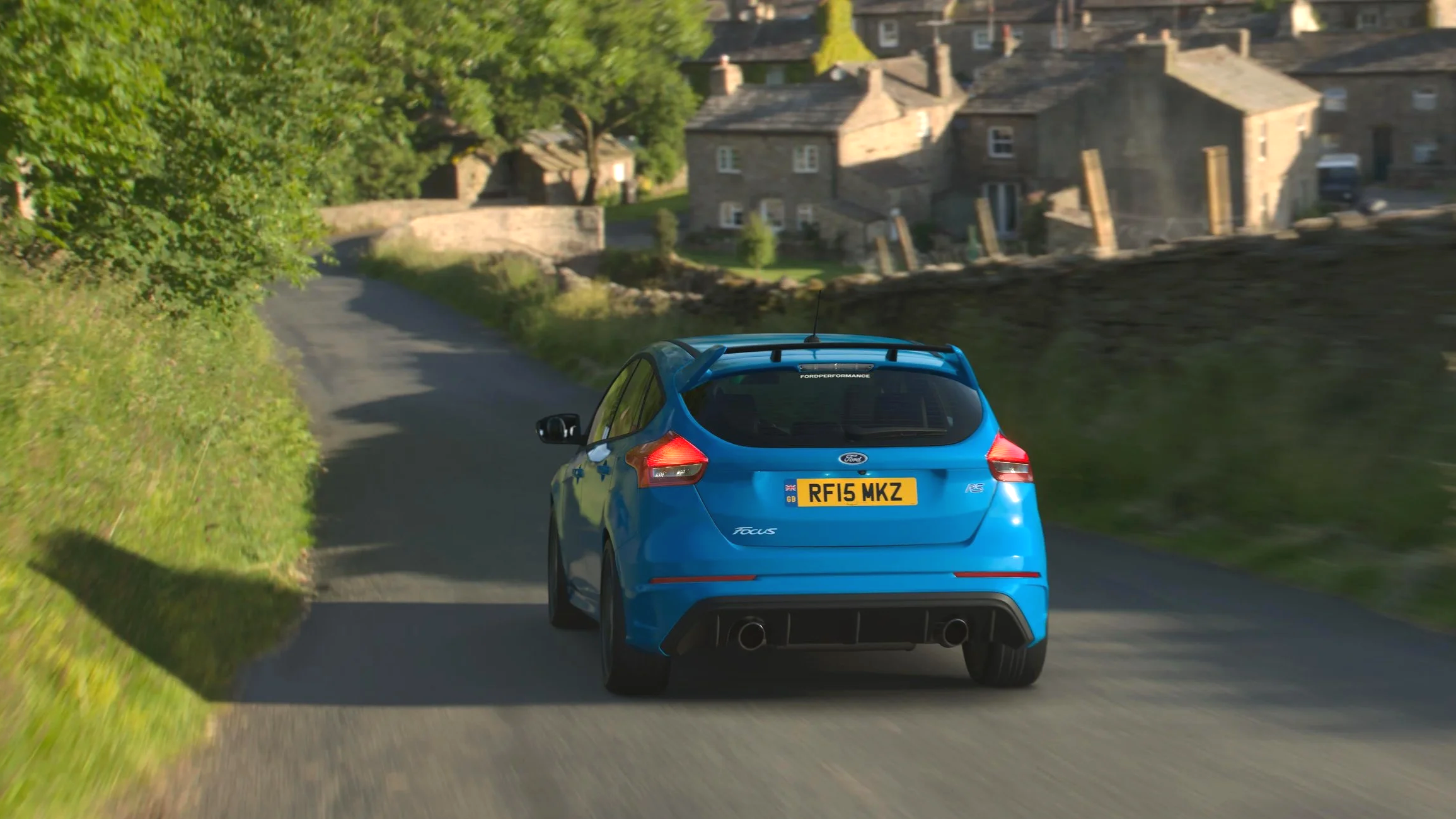
The Focus RS is ferociously quick, but the experience isn’t as emotional as you’d hope (Source: OptionZ via Gran Turismo)
I had also been lucky enough to drive an Escort Cosworth though. Around the empty service roads of Silverstone, the car felt brimming with life, a character of its own and a machine that gave everything it had over to you. It was analog. We can never go back to that.
Drive these cars back to back on Gran Turismo and you’ll get a sense of that. Although the Cosworth doesn’t quite simulate the turbo lag effect I experienced a few years ago, it does simulate its sense of spirit. It isn’t as quick as the Focus RS, but it’s a reminder that despite progressions in speed, power outputs, and lap time and the expected amenities of modern motoring, we lost something on the way.
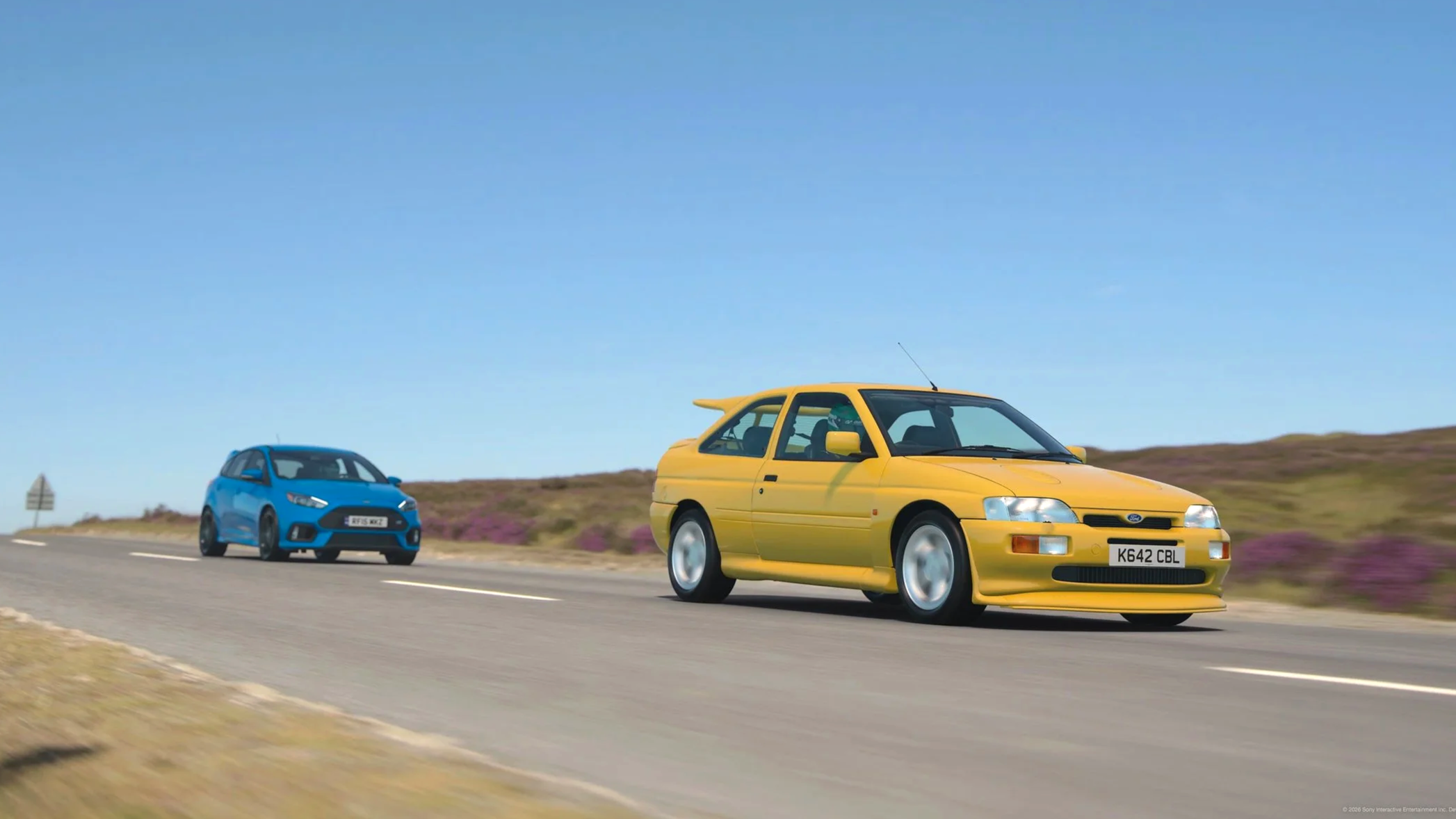
Driving the RS models back-to-back in GT7 is very revealing (Source: OptionZ via Gran Turismo)
A lot of modern cars simply don’t feel as alive as they used to, and we might never be able to get that back. Modern offerings filter the spirit of car underneath digital and safety technology. That’s not a bad thing, but the progress separates the driver from the machine. Our lives are safer and more comfortable, as well as quicker, but do we bond with the car in the same way as we used to? I don’t think we do.
Let’s get honest for a moment though. You wouldn’t buy something like an Escort now. You need your iPhone connectivity, climate control, and the barrage of data the touchscreen infotainment can offer. If you’ve loved ones (or any sense of self-preservation) you need your stability control systems and upgraded braking too. A hot hatch is a daily driver, not a second or third car.
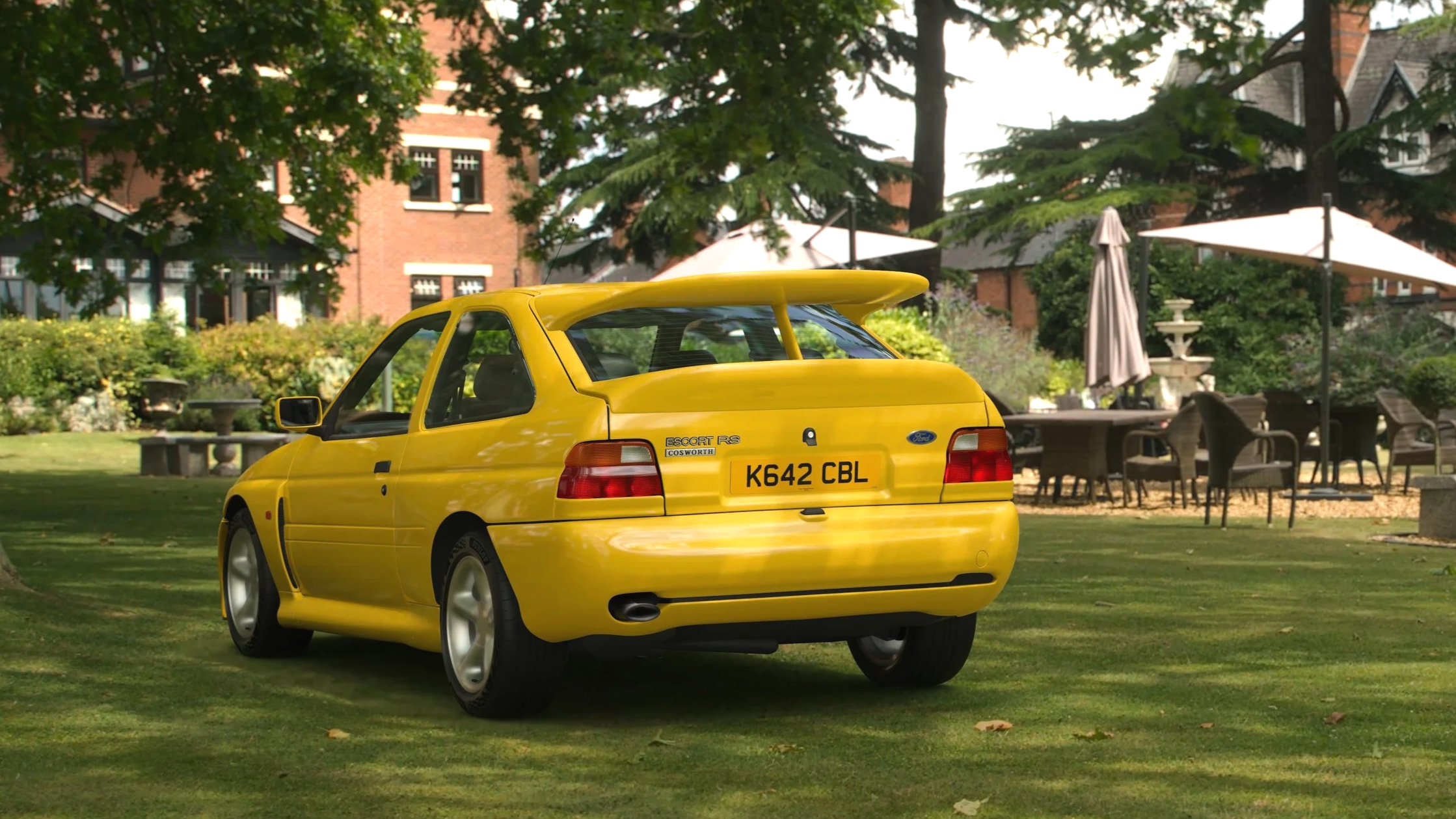
We will never have this again, and there’s no appetite for anything different in the car buying public (Source: OptionZ via Gran Turismo)
In the end, progress is progress. What it has given us is brilliant. It just isn’t as cherishable as what we had before. We should mourn that, but also acknowledge that none of us would choose to go back. We’d all pick the Focus now, and for good reasons too. As always, progress is the victor.