Torque Distribution in GT7 Isn’t Doing the Audi R8 Any Favours
We need to torque…
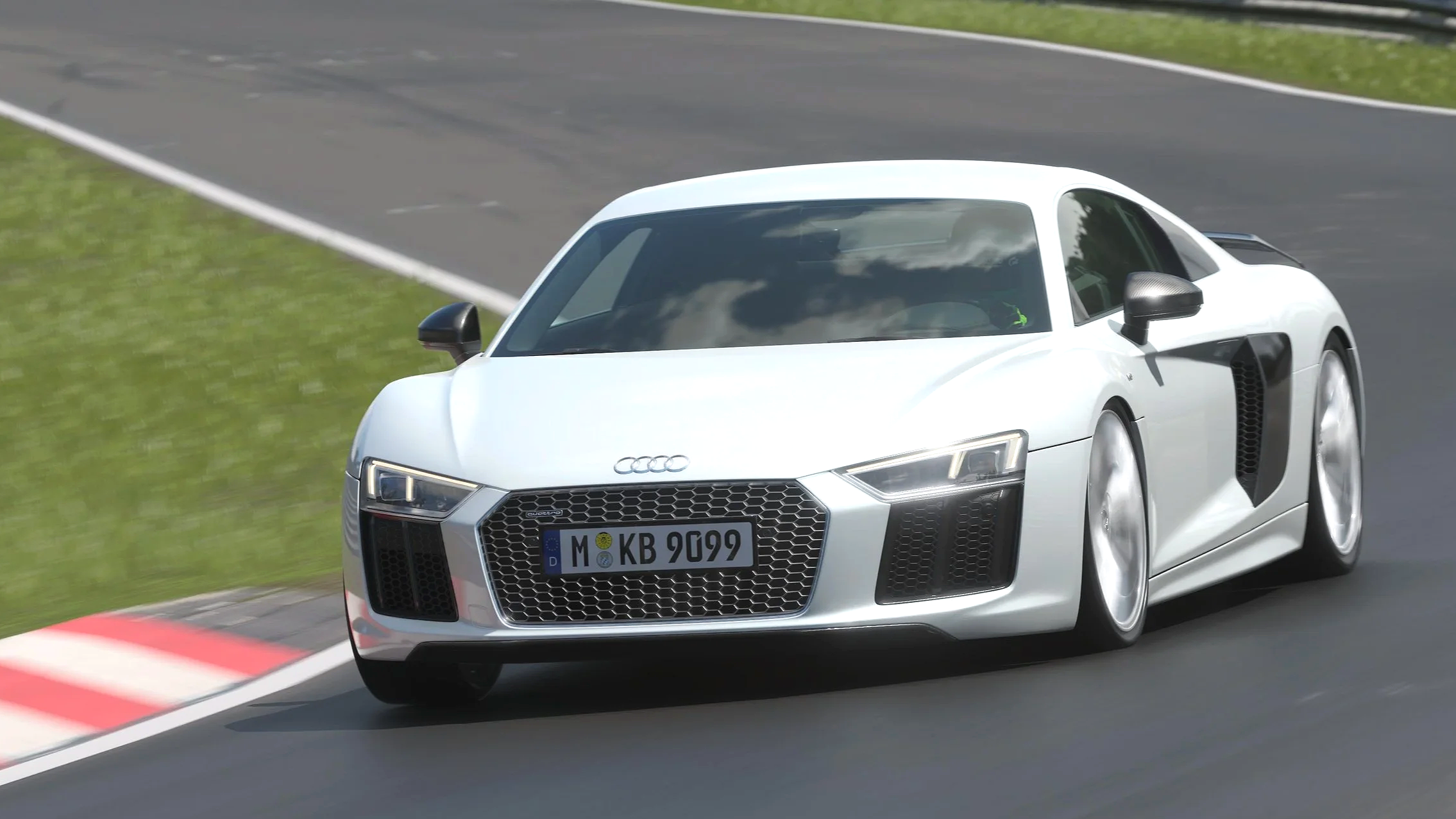
Suzuka White is a good look on the R8 (Source: OptionZ via Gran Turismo)
If you’re sticking your nose in and around Gran Turismo 7’s social posts, you’ll likely come across a familiar request: “Please make AWD cars FR.”
This is too simple a question for what these people really want. They want AWD cars to feel more progressive. More willing to rotate. More alive. In real life, an Audi R8 gives you that. In GT7? It doesn’t.
In GT7, torque distribution is presented as a fixed front-to-rear split. That’s useful for tuning, and it’s useful for consistency across a game featuring hundreds of vehicles, but it’s not how systems like the one in the Audi R8 V10 Plus actually work. Real systems are dynamic, fluid, living things constantly interacting and adjusting to work with the driver. They’re far more dynamic than how GT7 depicts them, constantly adjusting based on data points around load and grip.
In the real world, an R8 feels very rear-biased. Power is sent primarily to the rear, with the front axle only engaging when additional traction or stability is needed. Sensors and control systems decide when that happens, this defines how the car feels, as well as how hard it can be driven.
The R8 can be forced into rotation, but that’s not sustainable over the course of a lap (Source: OptionZ via Gran Turismo)
I’ve driven four versions of the R8 in real life, including the RWS, a base V10, and two V10 Plus models. Lucky devil, I know. In every case, the car feels rear wheel driven, even though there’s work at the front going on too. The front axle isn’t interfering with your inputs, in fact, it’s barely even there at all. It’s supporting you in the background, not interfering with your choices.
In Gran Turismo 7, that character is missing. The R8 feels heavier, more rigid, and more resistant to rotation. Instead of working with you, it feels like something you have to actively manage. That’s due to how the game represents the R8’s AWD system. By default, it runs a 35:65 front:rear torque split.
That correctly points to an FR with a rear bias, but it behaves like a constant state, rather than a dynamic one.
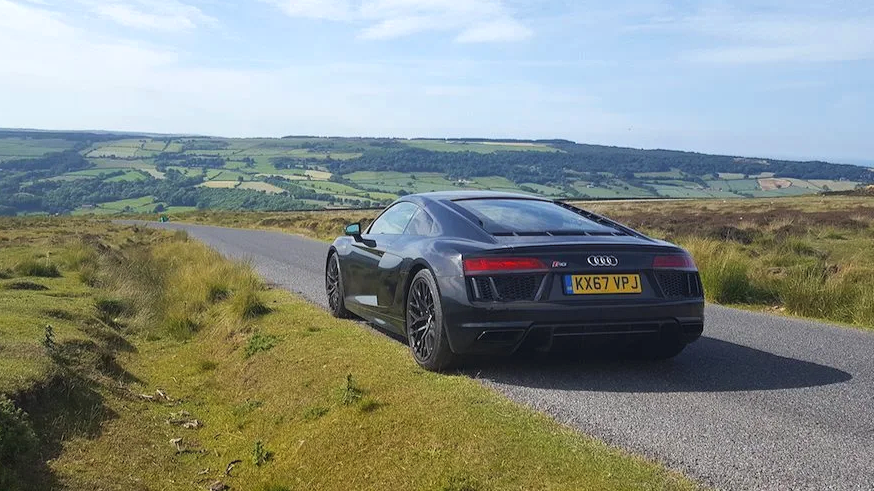
I don’t think I’d have ever got tired of this RWS R8, but I’d have bought the standard AWD version (Source: Jonny Edge)
So, what happens when we change this?
I ran three simple, easy tests from the Nordschleife’s start/finish line to the Aremberg split (the OptionZ “license test” trial) using a completely stock R8 V10 Plus ‘16, adjusting only the torque split via the Torque Vectoring Centre Differential component you can purchase in the tuning shop.
35:65 = 1:22.7
20:80 = 1:21.4
5:95 = 1:23.3
These results are interesting. At 35:65, the car is stable but slightly locked at the front. Put it under too much strain and it’ll understeer you into an Armco. At 5:95, it becomes far too loose, stripping the driver of the support that makes AWD effective. It’s 600bhp’s worth of a handful. At 20:80, it finds a balance. You can feel a willingness to rotate, but it remains composed on exit. It’s closer to the real R8 experience, at least, the one I had anyway.
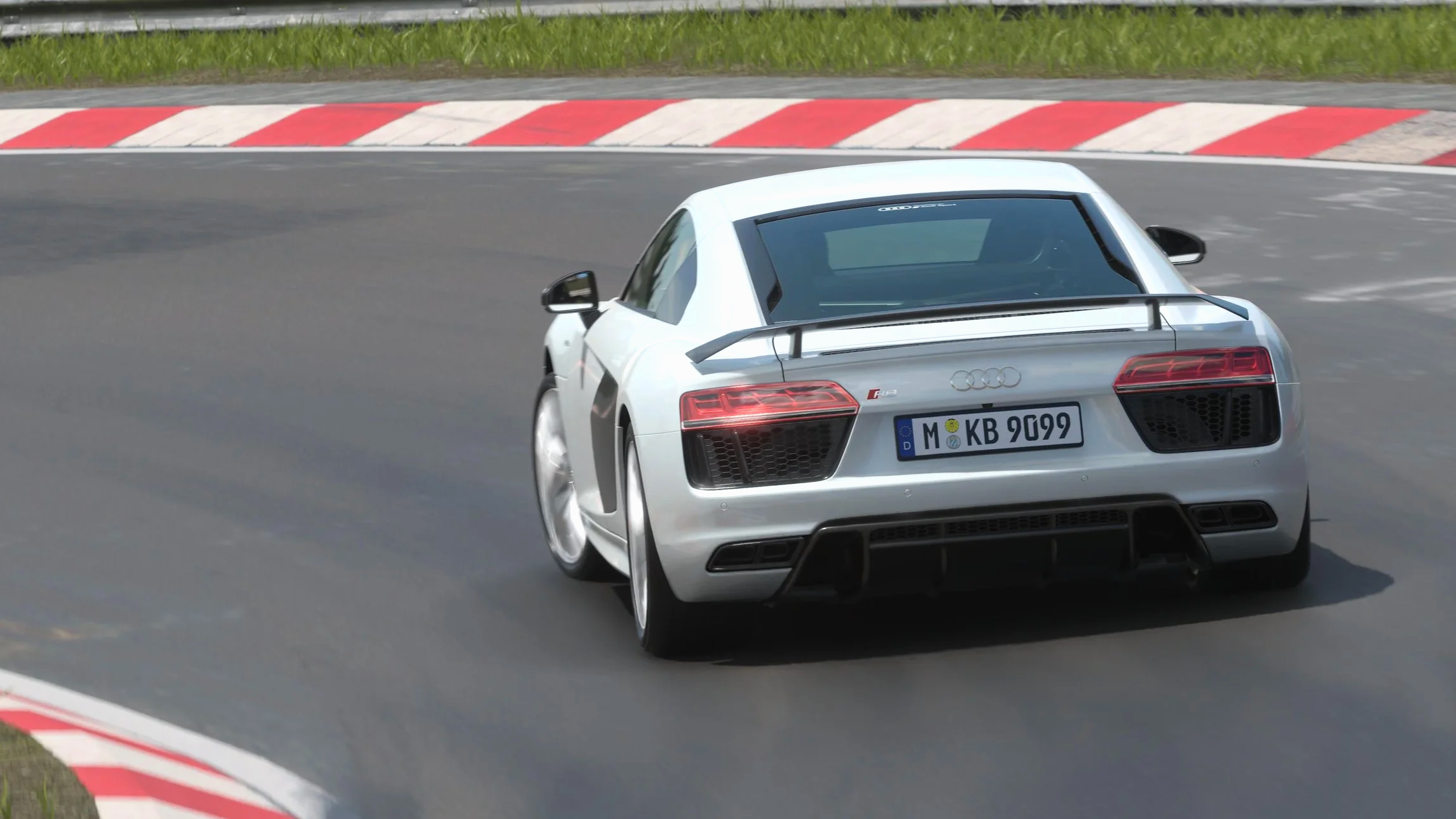
It’s very easy to pull a better dynamic experience out of the R8 (Source: OptionZ via Gran Turismo)
The takeaway here is that AWD cars need to stay AWD, but the game engine has room to grow in how it depicts modern, intelligent torque distribution.
AWD works best when the front axle remains part of the system, but when it can intelligently react, not have defined limits that dominate at a defined threshold.
That’s how the real R8 behaves. Gran Turismo just has to squeeze a pretty complex, dynamic system into a physics engine that needs to work across hundreds of cars. What we end up with is roughly authentic R8, but it doesn’t quite do justice to the real deal. It can’t fully recreate the real behaviour. In the end, AWD isn’t the issue. It’s how a dynamic system gets strapped into a fixed position.